A Doctor, a Legacy and a Name That Won’t Be Forgotten: 5 Things to Know About Dr Sipho Zwana
Written by Kuda Takundwa on August 19, 2026
By Kudakwashe Takundwa
In Bulawayo, the history of medicine can sometimes be found on the streets.One street bears the name of Dr. Tichafa Samuel Parirenyatwa. Just a street away, another medical pioneer is now being remembered in a different way.
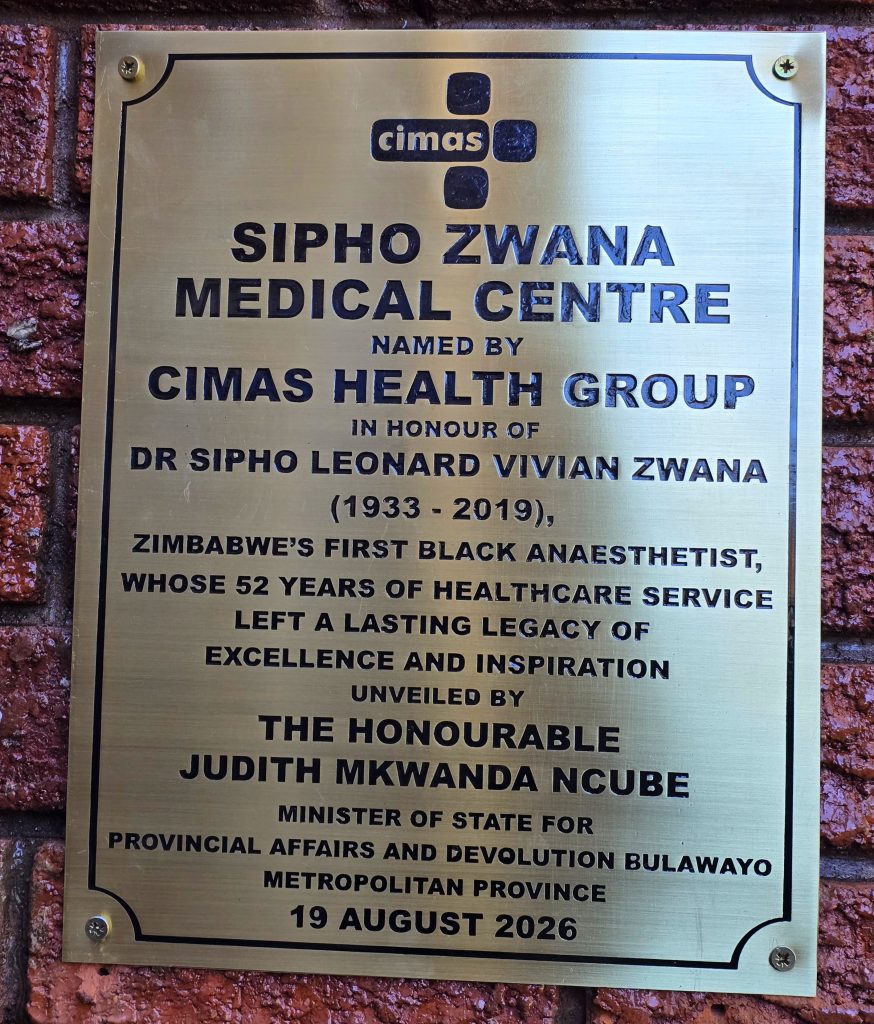
The former Bulawayo Medical Center has been renamed the Sipho Zwana Medical Center by Cimas Health Group, honouring Dr Sipho Leonard Vivian Zwana, one of Zimbabwe’s pioneering Black doctors.
But who was Dr. Sipho Zwana, and why does his name matter?Here are five things to know.
Zwana qualified as a doctor from the University of Natal Medical School in 1960 and later qualified in anesthesia in 1970.
𝟏. 𝐇𝐞 𝐰𝐚𝐬 𝐚 𝐩𝐢𝐨𝐧𝐞𝐞𝐫 𝐢𝐧 𝐚𝐧𝐞𝐬𝐭𝐡𝐞𝐬𝐢𝐚
Zwana qualified as a doctor from the University of Natal Medical School in 1960 and later qualified in anesthesia in 1970.
He became Zimbabwe’s first Black Zimbabwean anesthetist, entering a specialist field at a time when Black doctors remained significantly underrepresented in the profession.
His achievement placed him among a generation of Black medical practitioners who helped reshape healthcare during the colonial era.
𝟐. 𝐇𝐞 𝐦𝐚𝐝𝐞 𝐡𝐢𝐬𝐭𝐨𝐫𝐲 𝐚𝐭 𝐌𝐩𝐢𝐥𝐨
Zwana was the first Black doctor to work at Mpilo Hospital.For Bulawayo, that is a significant part of his legacy.
He arrived during an important period in the institution’s history, when the presence of Black doctors in the medical profession was still uncommon.Decades later, he remained connected to Mpilo.
At the hospital’s 60th anniversary in 2018, he reflected on its history and called for it to reclaim its former standing.
𝟑. 𝐇𝐢𝐬 𝐜𝐚𝐫𝐞𝐞𝐫 𝐥𝐚𝐬𝐭𝐞𝐝 𝟓𝟐 𝐲𝐞𝐚𝐫𝐬
Zwana retired in 2013 after 52 years in medicine.
His career extended beyond Zimbabwe, taking him to the United Kingdom, Ghana, and Kenya.
He also held senior medical leadership positions, including serving as medical superintendent at Parirenyatwa Hospital and United Bulawayo Hospitals.
It was a career that spanned more than half a century, but for his family, those years were measured in much more personal ways.
𝟒. 𝐇𝐢𝐬 𝐟𝐚𝐦𝐢𝐥𝐲 𝐬𝐡𝐚𝐫𝐞𝐝 𝐡𝐢𝐦 𝐰𝐢𝐭𝐡 𝐡𝐢𝐬 𝐩𝐚𝐭𝐢𝐞𝐧𝐭𝐬
At the launch of the medical center, Zwana’s daughter, Thandeka Zwana, offered a glimpse of the man behind the achievements.
“As his family, we witnessed the long hours, the interrupted family meals, the late-night emergencies and the countless times medicine needed him, sometimes more than his family needed him,” she said.
“We understood that medicine was never just his profession; it was his purpose. He cared deeply for each and every patient.”
She also remembered the values he passed on to his children.“He taught us that integrity is doing the right thing even when no one is watching,” she said.
“He taught us that education is a lifelong journey, that hard work is never wasted, and that every person, regardless of their background or circumstances, deserves to be treated with dignity and compassion.”
For his family, the legacy was, therefore, not only what he achieved in hospitals but what he taught at home.
𝟓. 𝐇𝐢𝐬 𝐧𝐚𝐦𝐞 𝐰𝐢𝐥𝐥 𝐧𝐨𝐰 𝐨𝐮𝐭𝐥𝐢𝐯𝐞 𝐡𝐢𝐦
Zwana died in 2019 at the age of 85.
Now, his name is attached to a place where healthcare continues ensuring that people who never met him will encounter his name.
At the launch, Thandeka described the honour in terms of a tradition associated with Día de los Muertos, in which death is sometimes understood in three stages: physical death, burial and, ultimately, being forgotten.
“This is a huge honor to have his name added here. Thank you, Cimas. That third death will never happen,” she said.
It is a powerful way to understand what the renaming represents.
Dr Sipho Leonard Vivian Zwana was part of a remarkable generation of Black Zimbabwean doctors who entered medicine during the colonial era, when the profession remained overwhelmingly white.
Among the pioneers of that period were Dr Tichafa Samuel Parirenyatwa, Dr Edward Pswarayi, Dr Silas Mundawarara, Dr McLeod Chitiyo, Dr Ngorima, Dr Sadza, Dr Mazhindu, Dr Ushewokunze, Dr Mazorodze and Dr Munyaradzi, alongside Zwana.
They did not all qualify at the same time or train together, but their careers formed part of an important transition in Zimbabwean medicine the emergence of a generation of Black doctors who would go on to occupy increasingly important professional and leadership roles.
Reader's opinions


Continue reading

 Skyz Metro FM